

No products
Prices are tax excluded


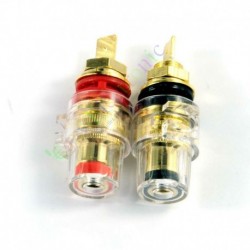
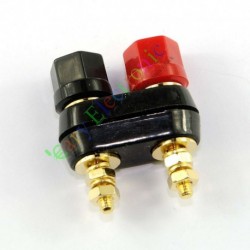
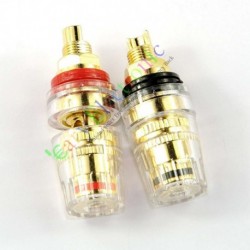
Speaker & Amplifier Binding Posts There are 3 products.
Speaker and amplifier binding posts provide fixed connection points for speaker cables on an amplifier or speaker enclosure. Browse the binding posts below for DIY audio builds and replacement projects.
Check mounting and cable fit before ordering
- Panel fit: compare the mounting hole, panel thickness, threaded shaft and clearance inside the enclosure.
- Insulation: check the supplied insulating hardware and the mounting requirements for your panel.
- Cable connection: confirm whether the selected post accepts your banana plug, spade connector or bare wire, and how the internal lead attaches.
A 5-way binding post offers several connection methods, but the exact openings and cable capacity depend on the model. Verify the individual product details rather than assuming every post accepts every termination.
Need matching banana plugs or spade connectors? Browse our Audio Jacks, Plugs & Connectors.
Speaker & Amplifier Binding Post FAQs
Select a question to read the answer.
What is the difference between a binding post and a banana plug?
A speaker binding post is a fixed terminal on the amplifier or speaker enclosure. A banana plug is a cable-end connector that inserts into a compatible terminal socket. They can work together, but they are different parts. For cable-end options, see our Audio Jacks, Plugs & Connectors.
Do all binding posts accept banana plugs and spade connectors?
No. Check the individual post's supported connection methods and dimensions, even when it is described as a 5-way binding post. The banana opening, stud size, clamping area and insulating cover determine what can physically fit. Match the exact cable termination to the post instead of relying on the category name or appearance. Pomona's binding-post datasheet illustrates why connection methods and panel fit must be checked for each model.
How do I check whether replacement binding posts will fit my panel?
Compare the mounting hole, usable threaded length, panel thickness and required insulating hardware with the product drawing. Overall post length is not the same as usable mounting length. Also allow space for the retaining nuts and internal wiring. If the listing omits a mounting dimension, ask for it before drilling or ordering.
What speaker wire size can a binding post accept?
There is no single wire-size range for every binding post. Use the selected model's stated wire capacity and connection method; a bare-wire hole, pin entry and spade clamp have different fit requirements. If the listing does not specify the capacity you need, confirm it before buying rather than judging by the size of the knob.
Can I connect bare speaker wire without banana plugs?
Yes, if the selected binding post is designed to clamp bare wire. Follow the equipment manual for power disconnection and wire preparation, keep the positive and negative connections correct, and prevent loose strands from touching adjacent terminals. Use the specified wire size and fastening method. Internal amplifier repairs should be handled by a qualified technician.