

No products
-

12V 40A 480W AC/DC driver Switch power supply adapter Transformer LED strip
Input voltage: 110/220 VACOutput...
$77.08 -38% $124.33

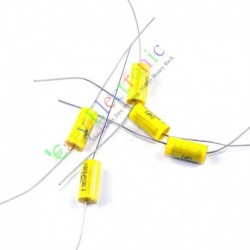
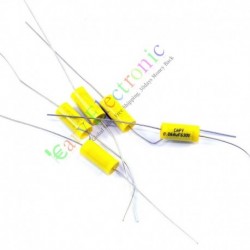
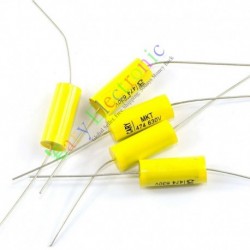
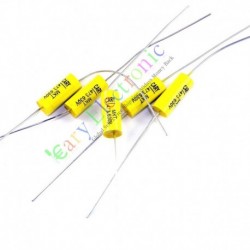
Polyester Film Capacitors There are 17 products.
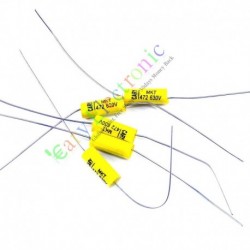
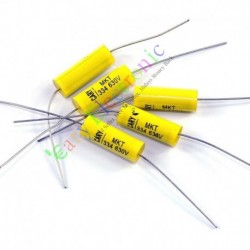
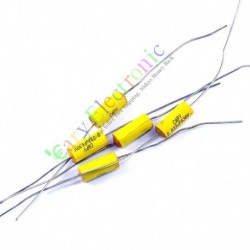
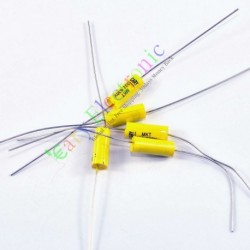
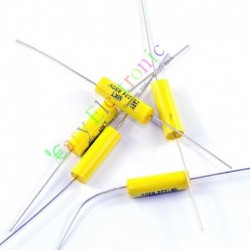
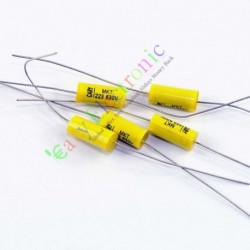
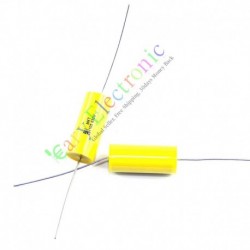
Polyester Film Capacitors are a practical choice for audio, amplifier, and general electronic applications that require stable capacitance and reliable performance. Our selection includes axial lead polyester film capacitors in a range of capacitance values and voltage ratings, suitable for coupling, filtering, tone circuits, and vintage audio repairs. Browse the products below to find polyester film capacitors for tube amplifiers, DIY audio projects, and electronic equipment. Before choosing a replacement, compare its capacitance, voltage rating, body size, and lead length with the requirements of your circuit.
Polyester Film Capacitor FAQs
Click a question to expand or collapse the answer.
Can I use polyester film capacitors in audio or tube amplifiers?
Yes, where the circuit calls for a film capacitor with matching electrical and physical specifications. Polyester types are used for signal coupling, bypassing and other general electronic functions. Check the schematic, capacitance, tolerance, voltage and temperature limits rather than choosing by colour or shape. The individual product specifications determine suitability. Have internal amplifier repairs handled by a qualified technician.
Are polyester film capacitors polarized?
No. Conventional polyester film capacitors are non-polar, so they do not have the positive and negative terminals of a polarized electrolytic capacitor. A DC voltage rating is not a polarity marking. Check the exact component datasheet and any manufacturer markings before selecting or installing it. See WIMA's dielectric comparison for the underlying material properties.
How do I choose the capacitance and voltage rating?
Use the capacitance and tolerance specified by the circuit or service documentation. Then verify that the selected part's permitted operating voltage covers the actual conditions, including temperature derating and any AC or pulse requirements. DC and AC ratings are different specifications; a printed VDC value is not an equivalent VAC rating. TDK's film capacitor technical guide explains these distinctions.
Can a higher voltage rating replace a lower one?
Often, provided the capacitance and tolerance are appropriate and the replacement also meets the required temperature, AC or pulse ratings and physical dimensions. A higher voltage marking alone does not prove compatibility. For mains interference suppression, verify the required safety class and approvals; a general-purpose film capacitor is not a substitute for a required safety-approved part. Vishay's application limits illustrate why these checks matter.
Should I choose polyester or polypropylene film?
Polyester is often chosen where compact size matters; polypropylene generally has lower dielectric losses. The better choice depends on the circuit's frequency, tolerance, temperature and voltage requirements. Compare datasheets and mounting space before changing types, and do not assume a different dielectric will automatically improve an amplifier's sound. Review the dielectric characteristics or browse our Polypropylene Capacitors category.
What does axial lead mean, and why does size matter?
An axial capacitor has one lead at each end of its body, rather than both leads emerging from the same side. Check the body length and diameter, lead length and mounting arrangement against the available space. Matching capacitance alone does not ensure that a replacement will physically fit an existing board or point-to-point assembly. Vishay's axial capacitor drawing shows the dimensions to compare.